


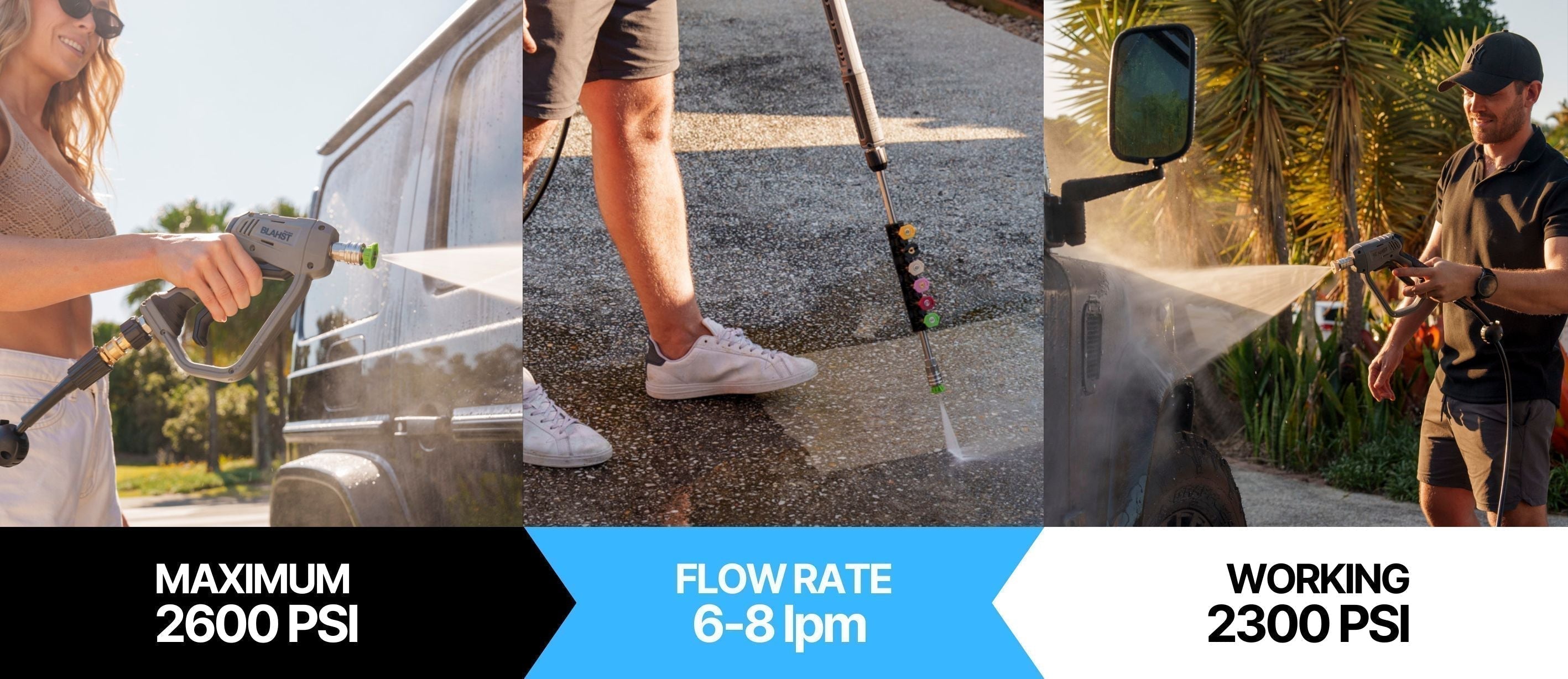
PSI matters when you use a pressure washer at your car because it controls how much force is hitting the paint, trim, and seals. Using the wrong pressure washer PSI for car washing can do more harm than good, stripping wax, dulling the clear coat, or forcing water into door seals and window edges. Cars are designed to handle airflow and rain, not the high pressure meant for concrete or pavers, which is why PSI needs to be carefully managed.
The right pressure washer PSI for car cleaning lets you remove dirt and road grime without damaging delicate surfaces. Lower pressure, paired with the Adjustable 5-in-1 Nozzle and the right spray distance, is much safer and can be just as effective as blasting the surface. In simple terms, PSI matters because it’s the difference between cleaning your car properly and gradually wearing it down every time you wash it.
Click here at Blahst to explore our top-rated, adjustable pressure washers and car detailing kits designed specifically to stay within the safe 1,000–1,500 PSI range, guaranteeing a professional, swirl-free wash for your vehicle.
What PSI Range Keeps Your Car Safe while Still Cleaning Effectively?
A safe pressure washer PSI for car cleaning typically falls between 1,200 and 1,900 PSI. This range is strong enough to lift road grime, mud, salt, and bird droppings, while still being gentle on paintwork, clear coat, rubber seals, mirrors, and trim. Staying within this PSI range helps protect your car’s finish and avoids common damage like stripping wax, dulling paint, or forcing water into door and window seals.
What matters just as much as PSI is how you use it. Even within a safe pressure washer PSI for car washing, using a wide spray nozzle and keeping a sensible distance makes cleaning more effective and far safer. Higher pressure doesn’t clean better, it just increases the risk of damage. In simple terms, the right PSI range lets you clean your car thoroughly while keeping it looking good for the long term.
How Should a Beginner Approach the First Pressure Wash on a Car?
A beginner should approach their first pressure wash on a car by starting gently and focusing on control rather than power. Set the washer to a low, safe pressure washer PSI for car use and choose a wide spray nozzle to soften the impact on the paint. Begin on lower panels where dirt is heavier and mistakes are less noticeable, keeping the wand moving and never holding the spray in one spot.
Work slowly and methodically as you move around the car. After rinsing, use a Microfiber wash towel to gently wipe down remaining film and safely dry the surface without scratching. Keep a comfortable distance, avoid spraying directly at mirrors, badges, window seals, and trim, and let the water lift dirt instead of forcing it off. If grime doesn’t shift, adjust your angle or step back before increasing pressure.
Is Water Flow Rate as Important as PSI?
Yes, water flow rate is just as important as PSI when washing a car. PSI controls impact force, but flow rate (LPM/GPM) is what lifts and carries dirt away, so low flow can leave grime behind and tempt higher pressure that can damage paint, trim, and seals.
The safest results come from balancing moderate PSI with steady flow so dirt rinses off without aggressive blasting. A washer like the Blahst R30 helps maintain that balance with adjustable pressure and consistent flow, especially when paired with the Adjustable 5-in-1 Nozzle and proper spray distance.
Is the Same Pressure Safe for Wheels and Tyres?
No, the same pressure isn’t always safe for wheels and tyres, even if you’re using a safe pressure washer PSI for car paintwork. Wheels and tyres are made from tougher materials, but they have sensitive areas such as valve stems, wheel weights, centre caps, and brake components. Using high pressure too close can force water past seals, damage painted or powder-coated wheels, or loosen balance weights.
That said, wheels and tyres can usually handle slightly more pressure than paint when used carefully. The key is control rather than force. Keep some distance, use a wide spray pattern, and avoid aiming directly into bearings or brake areas.
Should the Wash Begin with a Rinse or With Foam?
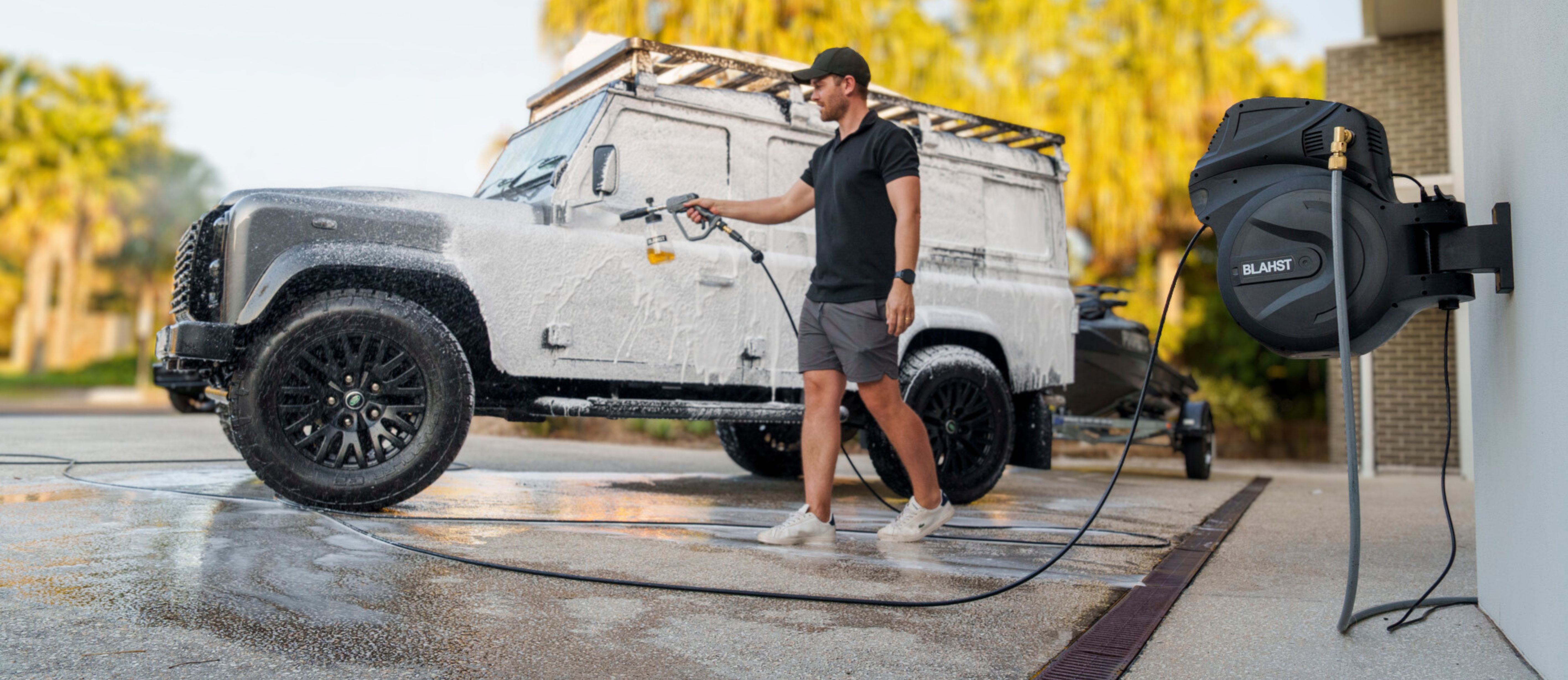
A car wash should always begin with a gentle rinse rather than foam. Using a safe pressure washer PSI for car washing, the initial rinse removes loose dirt, dust, and grit from the surface. Once the loose grime is gone, foam becomes far more effective. Foam sticks to the paint and breaks down remaining dirt so it can be rinsed away safely. Starting with a rinse and following with foam gives you a cleaner result while protecting the paintwork, making it the safest and most effective approach for washing a car.
How Much Influence Does the Nozzle Have on Safety?
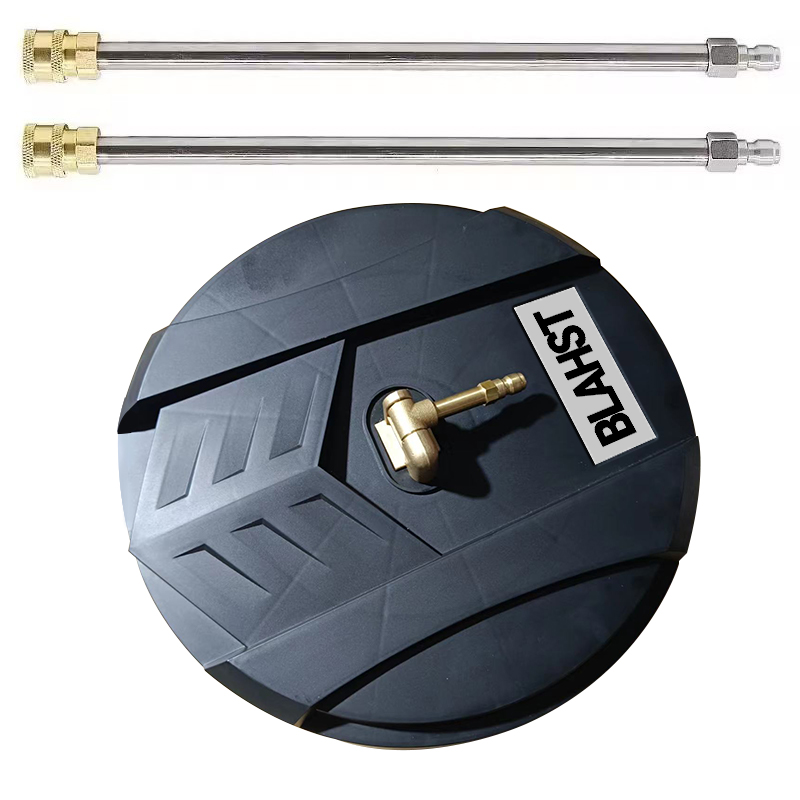
A car wash should always begin with a gentle rinse rather than foam. Using a safe pressure washer PSI for car washing, the initial rinse removes loose dirt, dust, and grit from the surface. For a more complete first pass, use an Underbody Cleaner to rinse salt, mud, and grime from underneath the car before you move on to the panels. Once the loose grime is gone, a foam cannon becomes far more effective. Foam sticks to the paint and breaks down remaining dirt so it can be rinsed away safely. Starting with a rinse and following with foam gives you a cleaner result while protecting the paintwork, making it the safest and most effective approach for washing a car.
How Does Distance Change the Effect of the Spray on the Paint?
Distance dramatically changes how pressure feels on your car’s paint. Even when using the recommended pressure washer PSI for car washing, spraying too close increases force and can strip wax or stress the clear coat. Stepping back just a small amount softens the spray and reduces risk straight away.
Keeping a steady distance also gives you more control. If maintaining that buffer is awkward because of reach, the 15m-r18-hose-extension-kit can help you move around the vehicle more smoothly without stepping in too close. If dirt isn’t lifting, it’s safer to adjust your angle or move slightly closer rather than increasing pressure. Distance acts like a built-in safety buffer for your paint.
How do Trims, Mouldings and Rubber Seals React to Pressure?
Trims, mouldings, and rubber seals are more sensitive than painted panels. Even at a safe pressure washer PSI for car wash, spraying directly at edges or seams can lift trim or force water behind seals, leading to leaks or long-term damage.
The safest approach is to spray across these areas rather than into them. Using a wide nozzle, gentle angles, and constant movement cleans effectively while protecting parts that are costly and frustrating to replace.
How do Older Cars Compare to Newer Ones When Choosing PSI?
Older cars usually need more caution when choosing PSI. Paint, seals, and trim on older vehicles may be thinner or more brittle due to age, sun exposure, and previous wear. Even a normal pressure washer PSI for car wash can be too aggressive if used carelessly.
Newer cars generally handle pressure better thanks to modern clear coats and improved sealing, but they’re not immune. Regardless of age, starting at the lower end of the safe PSI range and adjusting slowly is always the smartest option.
Can a Safe PSI Still Cause Damage if Used Incorrectly?
Yes, even a safe PSI can still cause damage if technique is poor. Holding the spray too close, using a pressure washer turbo nozzle, or aiming directly at sensitive areas can cause issues despite staying within the recommended pressure washer PSI for car range. Safe cleaning is about combining the right pressure with good habits. Controlled movement, sensible distance, and the correct nozzle all matter just as much as the PSI number itself.
Clean Your Car With Confidence
Cleaning your car safely isn’t about power, it’s about control. When you understand how pressure washer PSI for car washing works alongside nozzle choice, distance, and technique, pressure washing becomes simple and low-risk.
Confidence comes from starting gently and paying attention to how surfaces react. With the right approach, you can clean your car thoroughly while protecting paint, trim, and seals every time.
If you want a pressure washer built with gentle settings, steady flow and features designed for car care, explore the models at Blahst. Choose a washer that respects your paint and supports a safe, confident wash every time.
Share:
What is the Best Way to Clean a 4WD After An Outback Trip Using 4WD Underbody Cleaner Australia?
Why do Tyres Transform the Look of a Car when Treated Properly?